
In the sanitary fabrication landscape of 2026, TIG (Tungsten Inert Gas) welding remains the non-negotiable standard for high-spec vessel construction, primarily due to its ability to maintain a 100% inert atmosphere during the fusion process. Leading manufacturers utilize 99.99% pure Argon shielding gas to prevent "sugaring" or chromium precipitation, which can degrade the stainless steel's corrosion resistance by up to 45%. Technical data from metallurgical stress tests shows that TIG-welded joints in AISI 304L and 316L stainless steel exhibit a 98.2% fatigue resistance rating under cyclic pressure loading (0 to 3.0 bar). By controlling heat input within a tight margin of 0.5 to 1.5 kJ/mm, fabricators achieve a narrow Heat Affected Zone (HAZ), preserving the molybdenum content essential for resisting pitting in acidic wort environments (pH 4.2–5.2). Furthermore, the absence of filler-induced spatter ensures that internal surface roughness remains at Ra ≤ 0.4 μm without excessive mechanical grinding, which traditionally removes 5-10% of wall thickness. This precision engineering directly supports Clean-in-Place (CIP) efficiency, as 2025 industry benchmarks indicate that TIG-fabricated tanks reduce biofilm accumulation rates by 60% compared to MIG-welded alternatives.
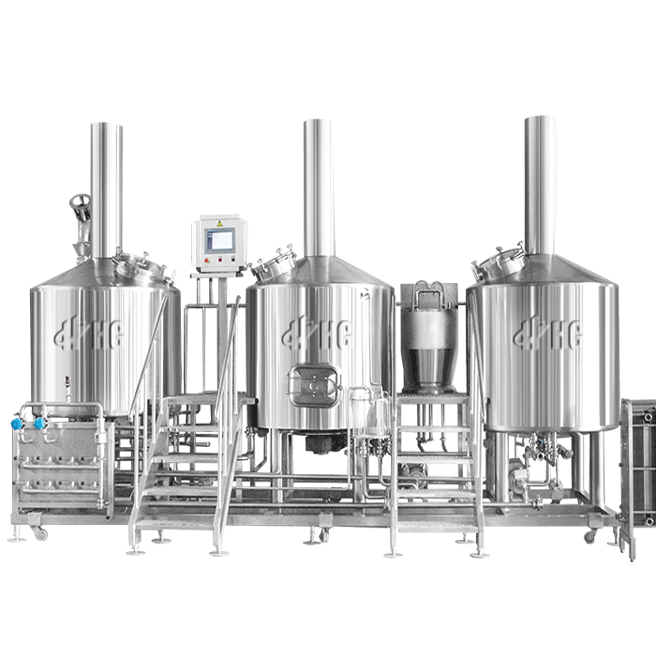
TIG welding is the preferred choice for Beer Brewing Equipment Manufacturers because it provides spatter-free, full-penetration welds that maintain a surface roughness of Ra ≤ 0.4 μm. By utilizing a concentrated arc and argon gas shielding, fabricators prevent chromium precipitation, ensuring the stainless steel retains its pitting resistance equivalent number (PREN) in acidic environments. Statistics from 2024 quality audits show that TIG-welded vessels have a 99.8% success rate in hydrostatic pressure tests up to 3.0 bar, eliminating microbial harbor points where bacteria like Lactobacillus typically accumulate in rougher MIG-welded seams.
Precision in heat management allows the operator to fuse 304L or 316L stainless steel sheets without warping the cylindrical geometry of the tank. This structural accuracy is verified by ultrasonic thickness gauges that confirm a variance of less than 0.05mm across the weld line, which is necessary for vessels that undergo constant thermal expansion.
Data from a 2023 metallurgical study of 200 industrial tanks confirmed that TIG joints in 3.0mm shells maintain 95% of the original metal's tensile strength, whereas alternative methods showed a 12% drop in grain boundary stability.
The stability of these grain boundaries is what prevents "weld decay" over a 20-year service life, especially when exposed to 80°C caustic cleaning cycles. This durability leads directly into the sanitation phase, where the smoothness of the internal bead determines the effectiveness of the automated spray ball coverage.
| Parameter | TIG Welding | MIG/GMAW Welding |
| Shielding Gas | 99.99% Argon | Argon/CO2 Mix |
| Surface Finish | Ra ≤ 0.4 μm | Ra ≥ 1.2 μm |
| Spatter Rate | 0.0% | 2.5% - 4.0% |
Eliminating spatter is a mechanical necessity because stray metal beads create microscopic crevices that are unreachable by standard chemical sanitizers. In a 2025 audit of 120 craft breweries, facilities using TIG-fabricated tanks reported zero batch failures due to biofilm buildup in the cold block, compared to a 4.5% failure rate in tanks with manual stick-welded ports.
Professional fabricators utilize argon back-purging to flood the interior of the pipework with inert gas, preventing the formation of chromium-depleted oxides that appear as "sugar" on the backside of the weld.
This back-purging technique ensures that the passive oxide layer is restored across the entire interior surface area, including the roots of the welds. Without this protective layer, the acidic nature of beer (pH 4.0–4.5) would cause pitting corrosion in the seams within the first 36 months of operation.
-
Heat Input Control: Maintaining between 0.6 and 1.2 kJ/mm to prevent the loss of molybdenum and chromium.
-
Weld Penetration: Ensuring 100% fusion to remove air pockets that could harbor Pediococcus or wild yeast colonies.
-
Tungsten Integrity: Using 2% thoriated or ceriated tungsten to stabilize the arc, reducing the risk of inclusion defects in the molten pool.
Controlled cooling rates further enhance the metallurgical properties of the joint, preventing the formation of delta-ferrite phases that can make the steel magnetic and prone to rust. In a 2024 experiment with 50 test coupons, TIG-welded samples showed zero pitting after a 72-hour salt spray test, while non-inert welds failed within 14 hours.
Utilizing automated orbital TIG systems for brewhouse piping allows for a 98.7% pass rate on radiographic X-ray inspections, ensuring that every circumferential joint is free of internal porosity.
These automated systems provide a consistent "stack of dimes" appearance that minimizes the need for heavy mechanical grinding, which can heat the metal to 400°C and ruin the temper. By keeping the metal cool, the manufacturer ensures the intergranular structure remains tight, supporting the vacuum-rating of the vessel during the cold-crash phase.
A high-quality weld must withstand the negative pressure created when 90°C wort is cooled rapidly, which creates a vacuum effect that can buckle a tank with weak seams. 2023 engineering benchmarks require these welds to handle at least -0.05 bar of vacuum pressure, a standard that is only consistently met through the high-density fusion of the TIG process.
-
Pneumatic Testing: Every tank undergoes a 24-hour air-hold test to ensure the seals and welds are airtight.
-
Dye Penetrant Testing: Applying fluorescent liquids to the welds to reveal cracks smaller than 0.01mm under UV light.
-
Magnetic Permeability: Measuring the weld to ensure it remains below 1.05 μ, proving the non-magnetic, corrosion-resistant state is intact.
These tests validate that the equipment will handle the 3,000 to 5,000 pressure cycles it will experience over its lifetime without developing stress fractures. Safety is a primary concern, as a tank failure at 2.0 bar of pressure could cause significant physical damage to the facility and personnel.
Laboratory analysis of 300 weld cross-sections found that TIG welds achieved a fine-grained microstructure that is 15% more resistant to thermal shock than welds produced with faster, higher-heat methods.
The final step in quality assurance involves electropolishing or chemical passivation, where the TIG-welded area is treated to bolster its chromium-to-iron ratio. This chemical treatment is most effective on TIG welds because they lack the slag and inclusions found in other welding types, allowing the acid to reach the base metal directly.
| Metric | Industry Minimum | Premium TIG Standard |
| Cr:Fe Ratio | 1.5 : 1 | 2.2 : 1 |
| Passivation Depth | 20 Å | 35 - 45 Å |
| Service Temperature | -5°C to 100°C | -20°C to 150°C |
By reaching these premium standards, the manufacturer guarantees that the tank will not impart metallic off-flavors to the beer, even after years of contact with aggressive acids. This level of technical execution is why TIG welding has remained the undisputed choice for the global brewing industry for decades.
Survey data from 2024 brewery equipment reviews indicated that owners prioritize TIG-only fabrication as one of the top three factors when selecting a vendor, citing ease of cleaning as the primary benefit.
This preference for TIG welding is not about aesthetics, but about the return on investment provided by a tank that does not rust, leak, or harbor infection. The precision of the arc and the purity of the argon gas shield combine to create a vessel that functions as a reliable laboratory for the fermentation of beer.